
Surf Terms & Safety
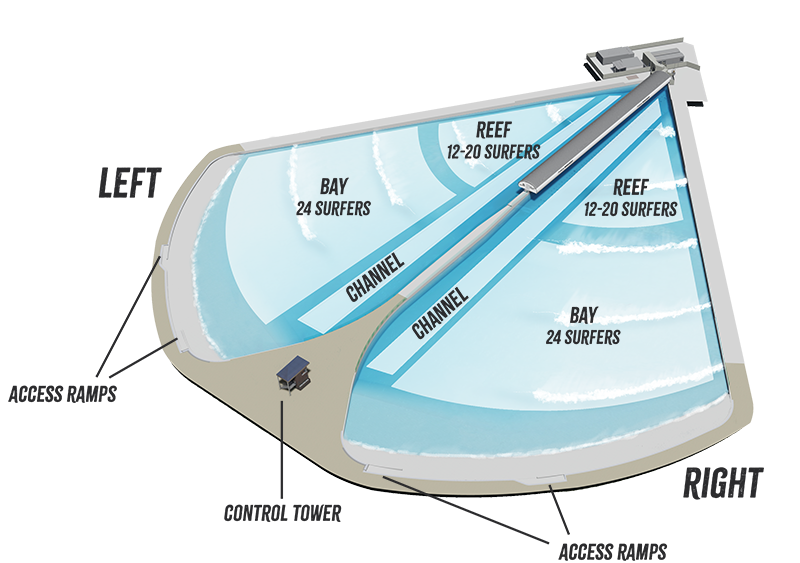
Our Cove has different areas and elements that you should know about.
It is separated by a central spine in to two halves: left and right. In each side, you will find two surfing areas: the bay, with whitewater waves for beginners and the reef, with green waves designed for more advanced surfers.
The channel runs along both sides of the central spine, and waves don’t break here.
Each side of the pool has two access ramps in to the water. Our control tower overlooks the cove and is the hub for our lifeguard team.
Surf terms in more detail
Access ramps
Every surfer will get in and out of the Cove from the bays, using dedicated access ramps. These ramps are 1.5m wide and have been specifically designed for surfers of all abilities and needs. There will be two access ramps per side of the bay, one for getting in and other for exiting the Cove.
The bay
The bay is the closest area to the shore of the Cove and like at a standard beach, it is the shallowest part of the Cove, with a depth up to 1.2 metres. The waves generated in the reef break and enter the bay as whitewater, providing the perfect learning ground for beginner surfers.
The reef
The reef is the furthest area from the shore of the Cove, where the waves are generated. The reef is the area where improver, advanced and expert surfers can catch a variety of different unbroken waves based on their ability, and surf them along the open-face of the wave.
The channel
The channel is a strip of deep water that runs parallel to the central spine of the Cove on both sides. It is the deepest area of the Cove, with a depth of up to 2.5 metres. It is designed to create a rip current that flows from the bay to the reef, helping to dissipate the energy from the waves and enable surfers surfing the reef to paddle back into position.
Surfing on the right
The Cove has two sides, separated by the central spine and on each half, there is both a reef and a bay. The waves in the reef break from the side walls towards the central spine, with an open-face for surfing. While standing on the shore and looking out, the right half of the Cove produces right-hand waves, meaning that the surfer will surf them moving from the left to the right.
Surfing on the left
The Cove has two sides, separated by the central spine and on each half, there is both a reef and a bay. The waves in the reef break from the side walls and move towards the central spine, with an open-face for surfing. While standing on the shore and looking out, the left half of the Cove produces left-hand waves, meaning that the surfer will surf them moving from the right to the left.
Whitewater
The whitewater is the mass of white foam that is formed when a wave breaks. In the Cove, the whitewater rolls into the bay creating a perfect learning environment for beginner surfers.
Greenwave / unbroken wave
A greenwater wave is a wave that has not broken with an open-face to surf along. In the Cove, a variety of green water waves are available on the reef for intermediate, advanced and expert surfers.
Takeoff / pop up
The take off is the act of catching a wave on a surfboard. The pop up is the act of getting up onto your feet on a surfboard.
Wipeout
A wipe out is when a surfer comes off their surfboard and essentially ends their ride. It involves falling correctly, protecting your head and recovering your surfboard as soon as possible.
Barrel / tube
A barrel is the stage in a hollow and powerful wave where the lip of the wave projects forward over the water, creating a tubular space where the surfer can be completely surrounded by water. Surfing a barrel is one of the most difficult manoeuvres in the sport.
Surf Safety
Lost Shore Surf Resort offers a controlled environment which people can enjoy safely and build confidence. However, it is important to have a full understanding of the risks involved and how to manage them.
All participants must be at least 7 years old, be water confident in the bay and able to swim at least 25 metres.

Before your visit
Watch the health and safety video that we email to you after your purchase, and read and sign our waiver.
You must attend the 15 minute health and safety briefing before your session starts. If you’re in a lesson, this will be included in the onshore section. It will not be possible for us to allow you to enter the Cove if you haven’t attended.
If you take part in an activity that is not suitable for your ability, we will ask you to leave and attend a more appropriate activity.
Be Aware
The Cove is built with concrete, we strongly recommend that your wear one of the helmets provided.
When your wave finishes, dismount carefully – try to fall backwards in a star position and protect your head.
Keep a safe distance from the wave generator.
Surfing is a physical sport. Ensure you are warmed up and well enough to surf.
There are strong currents in the Cove. If you or another surfer needs help, raise your hand and a Lifeguard will come and assist you.
Surf Etiquette
Make sure that your surf path is clear. If someone is in the way, wait for the next wave.
It’s one surfer per wave – do not drop in on other surfers.
Do not throw your board or let it loose when other surfers are in the vicinity.
Communicate with other surfers and maintain a positive and supporting attitude.
Don’t jump the queue, there are enough waves for everyone.
If you miss two waves in a row, move out of the take-off area and join the end of the queue.
Cold Water
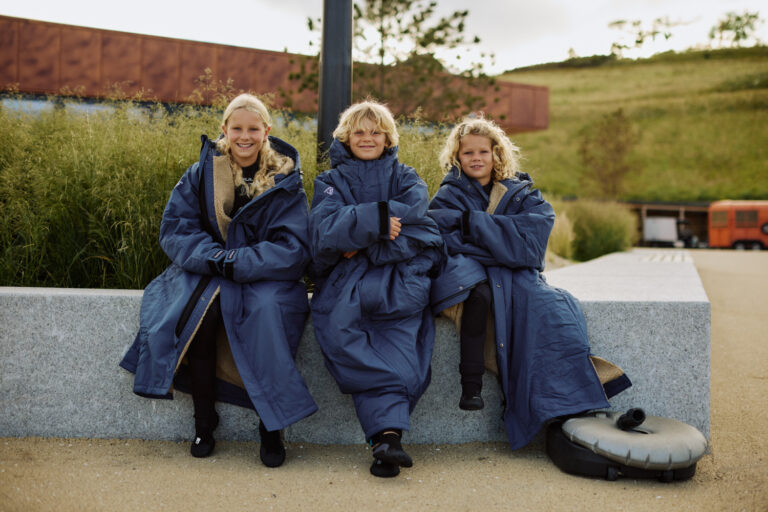
Winter Kids Lessons
Keeping Our Young Surfers Safe & Stoked
At Lost Shore, we’re all about making sure everyone has the best time in the waves while staying safe and comfortable. As the temperatures drop, we’ve made some seasonal updates for our younger surfers.
- Lessons for under-12s take a winter break from 1st December until 28th February. The colder weather and water temperatures aren’t ideal for our youngest surfers, so lessons will pause during these months. But don’t worry – spring will be here before you know it!
- Super chilly days? We’ll find a better time! Outside of our winter break, if the temperature drops below 7°C we recommend rescheduling for anyone aged under 12. Our team will keep an eye on the forecast and give you a heads-up if it looks too cold.
- Safety first – sometimes last minute changes happen. If the water temperature gets too chilly, we may need to cancel all lessons at short notice. We’ll always do our best to let you know as early as possible!
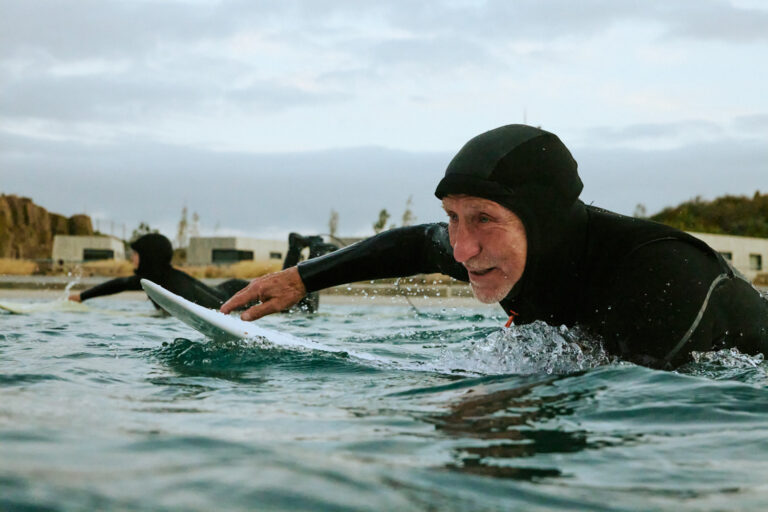
Winter Adult Lessons
Keeping You Surfing
We love seeing surfers in the water all year round – but sometimes, winter throws us a curveball. When temperatures drop too low, we must put safety first. Here’s what you need to know:
- Surfing in winter? Absolutely! We’re open and ready for surfers who want to keep riding waves through the winter months. Just make sure you’re prepared!
- Too cold to go? Yep, it happens. If the pool temperature drops below 3°C, it’s officially too cold to surf. At that point, we will need to cancel lessons for safety reasons.
- We’ll keep you posted. Our team will monitor conditions closely and let you know as early as possible if we need to make changes to your lesson.
We appreciate your understanding—it’s all about keeping things fun and safe. If you have any questions or need to reschedule, just give us a shout.